Taylor-Rae Collins-Headley is a senior broadcast journalism major at Howard University. Originally from Fort Lauderdale, Florida, she now resides in Washington D.C. This blog and its contents are all her original opinions, ideas, and musings. It also serves as a requirement for completion of the Howard University Newsvision Course. Feel free to leave a comment below!
On Tuesday November 5, 2013 the Howard University NewsVision class, a group of seniors in the final course of their broadcast journalism major, went to the Newseum. Opened on April 11, 2008, the Newseum is a 250,000 square foot museum of news which, according to its website, "offers visitors an experience that blends five centuries of news history with up-to-the-second technology and hands-on exhibits. The Newseum is just a stones throw from the Smithsonian, the White house, and the Capitol buildings, and with millions of visitors over the past five years, it has become one of Washington D.C's most popular attractions.
As we entered the museum, many of us had been there before and were excited to see the new exhibits the museum had to offer. The first exhibit we made it to was the ethics exhibit. Inside was a touchscreen ethics video game on an elliptical shaped table with spots for about 10 players split into two teams. The goal of the game was to grab virtual note cards with ethical situations on them and decide whether or not the course of action was ethical. The team who made the most ethical decision in the least amount of time won. Naturally as a well trained journalist my team won every time... though it helped that the other team's board had a technical glitch. Around the walls of the room booths with headphones and a video screen asked ethical questions pertaining to real-life decisions made by professional journalists and asked the viewer what they would do.
Kevin Carter and his Pulitzer winning photo.
In one situation there was a photo of a small malnourished child with a large buzzard perched next to her as she crawled towards help. The question asked if you would take the picture of the child and not help her, or if you would not take the picture and try to get the girl help. This turned out to be the story of Kevin Carter, a photo journalist working in the Sudan at the time, who came upon the girl as her parents were getting food from U.N. workers. Carter shooed the bird away after taking the picture but did not help the girl.
We then moved on to an area where you could film news stand-ups in front of a green screen as if you were really reporting live on the scene and take pictures in the Newseum "studio". My stand-up on the Supreme Court is below. This was a lot of fun because it gave us the opportunity to see what life will, hopefully, be like after graduation. We made a brief stop by the 9/11 exhibit where we were able to see Newspapers from around the world depicting the attack, pieces of the building, and a memorial to Bill Biggart, the journalist who died when the last tower fell.
On another floor, in an exhibit dedicated to black and female journalists through history, there was a large display featuring newspapers from various years in the past. I took a picture of the magazine from the year I was born, and at the risk of dating myself, it mentioned Clinton on the campaign trail before his first victory. We then watched a film about black journalists covering the civil rights era including the freedom rides and sit-ins and the police brutality in Birmingham.
After that, the class was released to its own devices and a friend and I decided to go see the 4-D movie they were playing in one of the theaters. What makes the film 4-D is the fact that while the 3-D movie is playing the chairs move as if you are really experiencing the action on screen. The movie was basically a "time travel" through journalistic history in which you got to go back and see the journalists as they were in their time and the circumstances that led them to be included among the field's greatest. One such journalist was Nellie Bly who helped launch the field of investigative journalism when she went undercover as a mental patient at Bellevue Hospital in New York and Edward R. Murrow as he did a live broadcast about bombs in London during WWII.
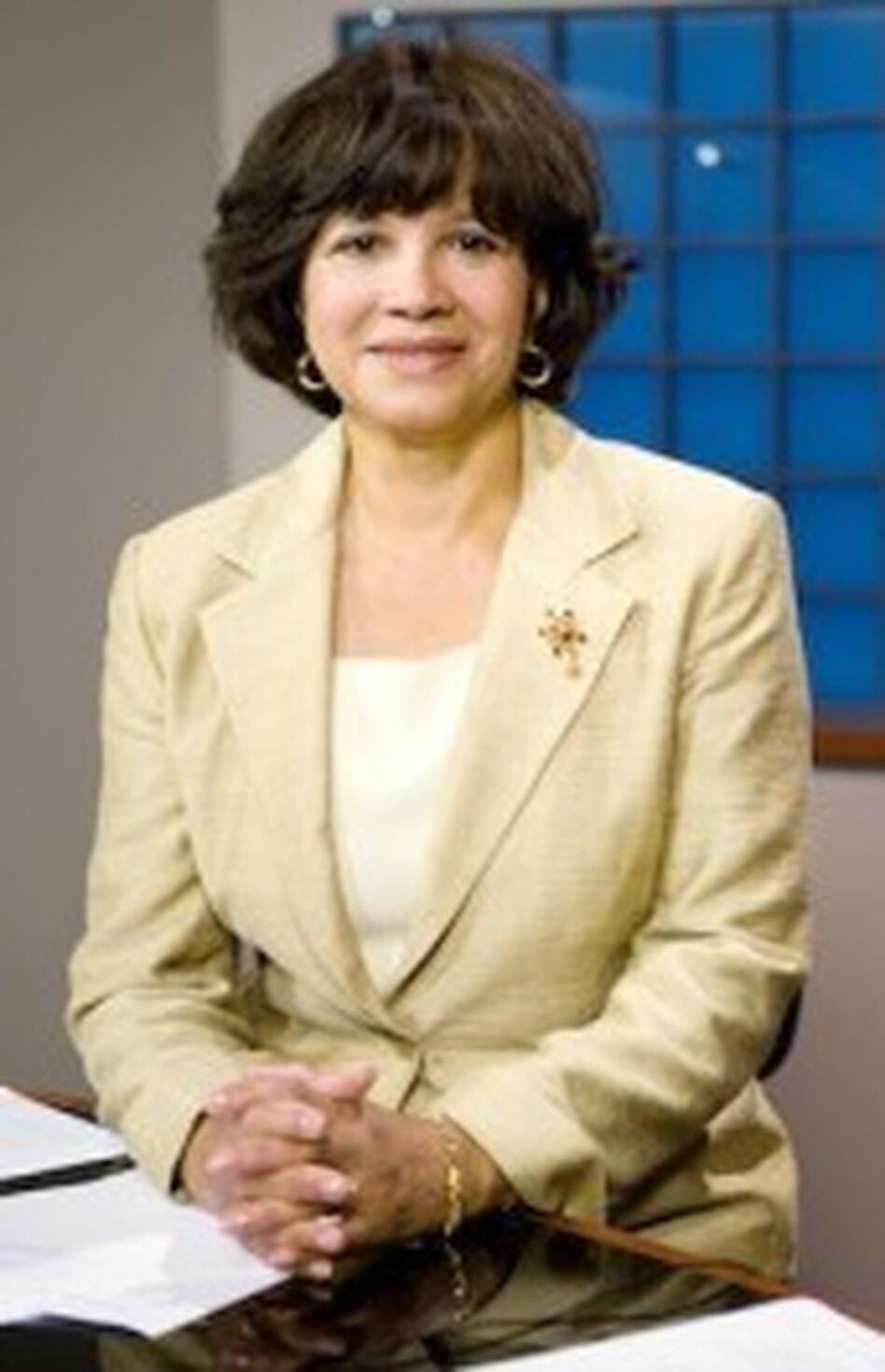
Dr. Francis Lee Thornton, former White House correspondent and Howard University educator, passed away at the age of 71 from pancreatic cancer on September 25, 2013. Thornton was born in Leesburg, Virginia in 1941 and raised in Washington D.C. She attended Roosevelt High School, graduating in 1959, and then attended the District of Columbia Teachers College. She received a master's degree from Michigan State University in rhetoric and public address and went on to earn her doctorate in radio, television, and film from Northwestern University in 1973. Some of Thornton's career accomplishments include being one of the first black female journalists to become a regular White House correspondent for CBS, a weekend host for National Public Radio's All Things Considered, a reporter & producer for the American Business network, a producer for CNN's "Both Sides With Jesse Jackson", and a former president of the Society of Professional Journalists' D.C. Chapter. Her journey at Howard University began in 1983 when she joined the Howard University School of Communications as a broadcast journalism professor. Under her tutelage, nationally recognized anchors and correspondents such as Fredericka Whitfield and Jennifer Thomas of CNN, Michelle Miller of CBS News, and Lesli Foster of WUSA-9 in Washington D.C. were able to hone their skills as journalists. Dr. Thornton made an invaluable impression on all those she taught, and prepared a generation of journalists and educators to bear the torch of truth and fairness. Dr. Bishetta D. Merritt, PhD is the interim chair of the Media, Journalism, and Film Department in the Howard University School of Communications. She first met Dr. Thornton when she took a class on African-Americans in the press as a graduate student at Ohio State University. She said that Dr. Thornton would drive up from Cincinnati every week to teach the class.
Photo Courtesy of University of Maryland
"She was the only African-American
professor I had the whole time I was at Ohio State working on my M.A. and
doctorate. So of course it was inspiring that even though she was a working
journalist, she had her PhD. I was thrilled to know that there were people out
there like I wanted to be so I was really excited." Dr. Merritt said. She said that Dr. Thornton's teaching style was tough, but that she learned a lot of useful information. "You couldn't get away with anything, no excuses.
She was always well prepared and she did a lot of research. [She] presented us with
great information and this was a theory class... I still have my notes to tell you the
truth and I used them when I began to teach the following year. She was excellent,
just a great teacher." she said. Dr. Merritt kept in touch with Dr. Thornton, but lost contact for a few years until they reconnected at Howard University. "When I saw her as a reporter on CBS I would
write her a note, we didn't have cellphones, texts and twitter and all that
kind of stuff so I would send her a note or give her a call like, “I saw you!” she laughed, "But when I first came [to Howard]to work, I was walking past a classroom and
there she was and I probably gasped and ran in there and hugged her or
something and I may have not waited until class was over because I was just so
happy to see her." After hearing of her passing last week, Dr. Merritt said that she was upset to hear of the loss.
Dr. Thornton stayed at Howard University until 1997 when she joined the University of Maryland's Journalism School as a broadcast reporting professor. From 2008 to 2009 she served as the interim dean of the school of journalism, and as the interim associate provost for equity and diversity at the university. To help graduate students with financial aid, she created the Lee Thornton Dissertation Fellowship with an endowment shortly before she passed away. Dr. Thornton is survived by her sister, Marilyn Thornton and her mother Betty Thornton.
As journalists, we have certain responsibilities to the public that we must abide by if we are to remain the "watchdogs" of the country. These responsibilities include Truthfulness, fairness, privacy, and responsibility. Alone they are all valiant qualities, but when combined, they form the cornerstone of good journalism and what it takes to be a trustworthy journalist. Let's examine each of these qualities. While truthfulness may seem like a given, it should not be taken for granted. The public trusts us to let them know what is happening in their community, in their nation, and around the world. Because we have this enormous duty to them, we must ensure that everything we produce is factual, unexaggerated, and straight-forward. Sources cannot be made up, quotes cannot be edited or paraphrased, audio and video cannot be doctored. When this happens, and the public finds out, they lose faith in not only the journalist or organization, but in the media as a whole. When it comes to fairness, it means that we must give equal coverage and opportunity to all parties with a stake in the item being produced. Incidents that this can be applied to have become commonplace in recent times, for example giving bipartisan coverage during important political events, incidents between the police and civilians, and incidents including race. If we only show one side of a story, we may unintentionally create bias among the people who view or read our publications. As journalists, it is our duty to remain impartial and to cover all sides of a story so that we can perpetuate fairness in the media. Furthermore, maintaining the privacy of our sources is extremely important. If the safety or well-being of a source would be comprised if their identity was revealed, it is imperative that we keep that information guarded. This accomplishes two things, it encourages the source to trust us and to remain as a provenance of information, and it emboldens others to become our sources as well. Finally, we have responsibility. Though we provide information to the masses, journalists are the servants of our viewer/readers. We aren't just ethical journalists because we want to be, we are because we must. It is our duty to provide the American people, and the people across the globe who may be watching, with information that they can trust and use to better themselves, their community, and their lives.
The issue arises when journalists shirk their responsibilities to the public and their craft by acting unethically. One such journalist is Johann Hari. Hari was a correspondent and foreign contributor for The Independent, a British newspaper, and The Huffington Post until it was discovered, in 2011, that he had been using quotes from other journalists' interviews. Quotes he would claim to have gotten during an interview, for example his interview with late Venezuelan President Hugo Chavez, actually came from pieces published by fellow journalists. He claimed that he took these quotes because the interviewee wasn't speaking clearly on his recordings, and it would be easier to have the reader surmise what he or she is saying by pulling quotes from other journalists that may have asked similar questions. His explanation was that he didn't know that what he was doing was wrong because he had never taken formal journalism classes. In the aftermath of the incident, he was suspended from the paper but after being invited back decided not to return to writing for the paper and he is going to concentrate on writing a book instead. Hopefully the book will be all original material.
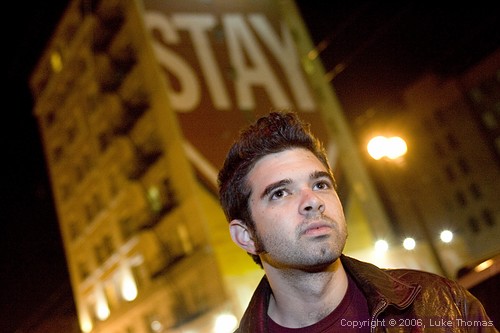
The journalist who has spent the longest amount of time behind bars for not reveling a source was Josh Wolf. Wolf was covering a protest in San Francisco California in which some of the protestors were vandalizing property. Though Wolf didn't videotape the vandalism being committed by the protestors, he was able to get footage of police using excessive force by choking protestors and by threatening civilians with stun guns. During the federal trial that ensued, prosecutors subpoenaed Wolf for his footage, which showed the identities of some of the protestors, but he refused. He was held in contempt of court and put in jail until he decided to turn over the tapes to the federal prosecutors. He remained in jail for 226 days (roughly 7.5 months), the longest time any journalist has ever spent behind bars for not revealing a source. The previous record was 168 days held by freelancer Vanessa Leggett. Wolf was released after posting the video online and did not have to testify in the case. His unedited video footage of the police brutality incident is below.
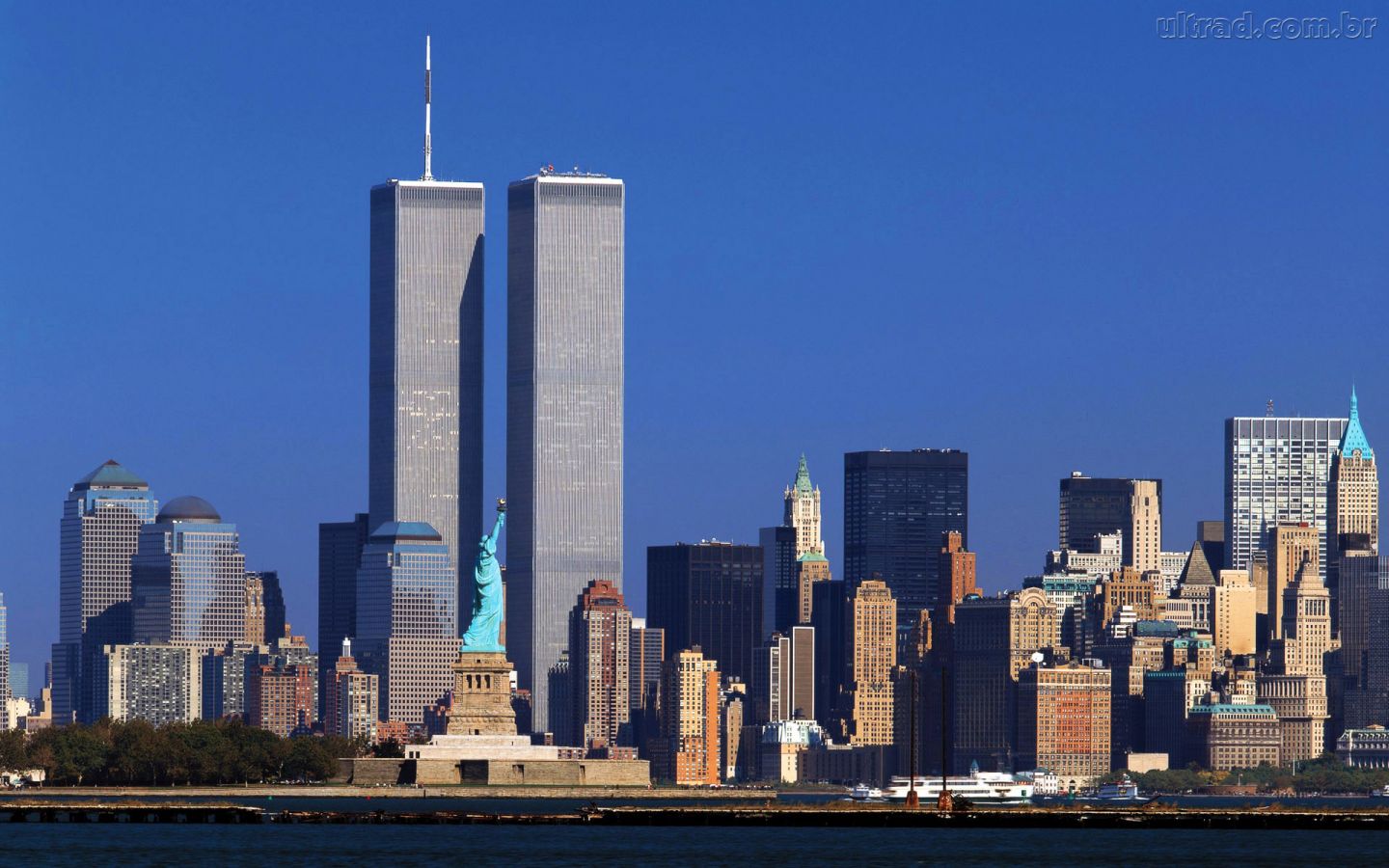
Twin Towers in NYC Skyline
Photo Courtesy of Mark Walston
I remember 9/11. I remember where I was, what I was doing, who I was with. I was in my 4th grade class in Sunrise, Florida and we were doing some sort of arts and crafts project, but then my teacher got an email or a text message, and I will never know what it said but she jumped out of her seat and ran to the television to turn it on. I can't remember what station it was tuned to, it didn't really matter at that point because every channel had the same thing. One of the Twin Towers was smoking, like there had been a fire or an explosion we didn't know. We kept watching and finally someone came on and told us what was happening, a plane had crashed into one of the towers. I thought it was weird, how can a plane crash into a tower, didn't they see it in front of them? Why were they flying so low anyway? We sat there and watched the tower burn for a long time, now we know that it was about 16 minutes, but it seemed like forever before we saw the second plane hit the other tower. It had been completely silent in the room, which in retrospect was amazing for nine and ten year olds, because no one was saying anything. I remember looking around and seeing everyone glued to the TV and my teacher sat at her desk crying. I've heard other people say their principal came on and told the teachers to turn off the televisions so the kids couldn't watch but I don't remember any such message at my school. We watched from beginning to end, no filter, no censor. I watched the people hanging towels out of the window trying to get help, the jumpers who fell past a camera that was courteous enough not to show them hitting the ground, the grey ghosts fleeing from billows of dust and ash as the towers fell, we saw it all. That was the craziest part in my mind. Watching the tallest buildings in New York sink straight down into nothingness. They were there and then they weren't. Simple as that. The skyline changed forever. America changed forever. Our class changed forever. You can't unsee something like that, ever. Then to hear that it was a terrorist attack, that this wasn't a tragic accident but a deliberate act by people who hate us simply because of where we live. That two more planes had gone down, one into the Pentagon and another in Pennsylvania, that 3,000 people had lost their lives through senseless violence. This was indescribable... Today we have the Freedom Tower, and exhibit of the enduring strength of America and it's tenacious spirit.
The new NY skyline with Freedom Tower completed earlier this year.
Photo Courtesy of Google
As far as the news coverage, in the clip below you can see a compilation of 6 major news networks coverage of 9/11. From left to right and top to bottom it is NBC, CBS, BBC, CNN, FOX, and ABC. If you watch from beginning to end you can see that it started out as a completely normal day, Good Morning America was on, football games, pageant contestants trying on a crown, normal things that one would expect to see on TV. One by one you see the news come through, much of the footage came from local New York affiliates of the station, and the stations would say something like breaking news, or have whatever anchor was on air announce that something that happened. Then it cut directly to footage of the first tower smoking. None of the stations cut to commercial during the entire incident and the footage was live with a small delay so that the stations could screen any sensitive content before it would be broadcast to the entire nation. When the second plane hit, almost every station showed it because they couldn't change away in time. They felt obligated to show the incident from beginning to end without interruption, and censored very few images, they let the American people see exactly what was happening as it was happening. Even in the days after when they were looking for people in the rubble and beginning to clean up the debris, it was still the lead of every news cast.
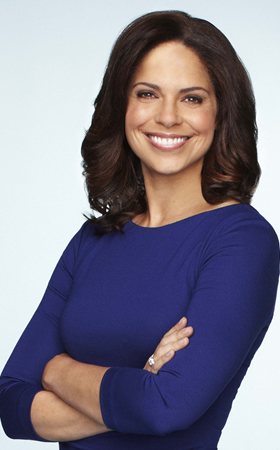
Maria de la Soledad Teresa O' Brien was born in St. James, New York to Edward O' Brien, an Irish mechanical engineering professor, and Estella O' Brien, an Afro-Cuban French and English teacher. The fifth of six children, she attended Harvard University from 1984-1988 but did not obtain her degree until 2000. She began her news career as an associate producer and news writer at WBZ-TV, an NBC affiliate in Boston. In 1991, she joined NBC news as a field producer for Nightly News and the Today Show. She continued to work on various programs for NBC until 2003 when she moved to CNN. After co-anchoring American Morning with Miles O' Brien, she began creating her In America documentary series which includes five installments of Black In America and most recently, Latino In America.
On March 29, 2013 she left CNN to start the Starfish Media Group production company. Starfish Media Group entered an agreement with HBO to air new programs and concepts it develops, and O' Brien will be joining Real Sports with Bryant Gumbel. Most recently, Soledad O' Brien has become a special correspondent for Al Jazeera America and will be producing a series of documentaries for the network. She has won an Emmy for her work on The Know Zone and an NAACP President's Award. She was the journalist of the year for the National Association of Black Journalists in 2010, and is an honorary member of Delta Sigma Theta Sorority Incorporated.
I find that her determination to stay true to her various cultures and ethnicity make her truly unique. She refused to change her name at the beginning of her career to make it more racially ambiguous and she reports on a wide range of topics that impact the black and Latino community. No one had thought of doing a series focused solely on life in black America. The documentaries and newscasts she produces incorporate health, business, race and ethnicity, as well as social change. She also engages the viewer through her conversational style of reporting and her in-depth style of interviewing. She leaves the viewer with a complete picture of what is happening in the story. She also serves as a role model for women of color wanting to break into the broadcast journalism field. There are so few women who look like we do reaching heights like anchoring for NBC and CNN and she was able to do it while remaining true to herself.


 We then moved on to an area where you could film news stand-ups in front of a green screen as if you were really reporting live on the scene and take pictures in the Newseum "studio". My stand-up on the Supreme Court is below. This was a lot of fun because it gave us the opportunity to see what life will, hopefully, be like after graduation. We made a brief stop by the 9/11 exhibit where we were able to see Newspapers from around the world depicting the attack, pieces of the building, and a memorial to Bill Biggart, the journalist who died when the last tower fell.
 On another floor, in an exhibit dedicated to black and female journalists through history, there was a large display featuring newspapers from various years in the past. I took a picture of the magazine from the year I was born, and at the risk of dating myself, it mentioned Clinton on the campaign trail before his first victory. We then watched a film about black journalists covering the civil rights era including the freedom rides and sit-ins and the police brutality in Birmingham.